
Sometimes a tree just looks off. Maybe the leaves are thinning, one side has dead branches, the bark looks rougher than usual, or the tree just doesn’t seem as full as it used to. Most homeowners notice these things before they know what they mean.
A struggling tree isn’t always a dying tree, though. It could be stress from drought, dealing with pests, showing early signs of disease, recovering from storm damage, or just going through a normal seasonal change. Before you assume the worst, it helps to know which signs actually matter and which ones don’t.
Here’s how to tell if a tree is dying, what those signs actually mean, and when it’s time to have someone take a closer look.
Signs a Tree May Be Dying
A dying tree usually shows more than one warning sign at a time. One brown leaf or one dead branch doesn’t mean the whole tree is in trouble. Trees are living things, and like the rest of us, they can have a rough season.
When several symptoms show up together, that’s when you want to pay attention. Here’s what to actually look for:
Dead or Brittle Branches
A few dead branches can happen, especially after storms or a stressful season. If branches are dying throughout the tree, or large limbs are brittle and breaking easily, that points to something deeper going on.
Dead branches are also a safety concern. They can fall without much warning, and they usually pick the worst possible moment to do it.
Peeling or Missing Bark
Bark protects the tree. If large sections are missing, peeling away, or cracking deeply, that can signal decay, disease, pests, or physical injury.
Some trees naturally shed bark, so don’t panic over every loose piece. However, if bark loss shows up alongside dead limbs, holes, soft wood, or oozing areas, it’s worth taking seriously.
Thinning Leaves or Early Leaf Drop
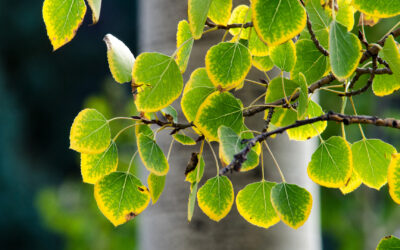
Leaves tell you a lot about a tree’s health. A dying tree may have fewer leaves than normal, smaller leaves, brown edges, yellowing, or leaves dropping earlier than they should.
This can happen for a lot of reasons, including drought, root stress, disease, or pests. Timing matters here too. Leaves dropping in October is probably normal. Leaves dropping heavily in July usually deserve a closer look.
A Thin or Uneven Canopy
The canopy is the leafy top part of the tree. If it starts looking thin, bare, or uneven during a season when it should be full, that’s a sign the tree is struggling. This is one of the easiest signs to spot from your own yard since it changes the whole silhouette of the tree.
Mushrooms or Decay Near the Base
Mushrooms growing near the base of a tree can signal decay in the roots or trunk. Not every mushroom means the tree is doomed, but fungal growth around the base isn’t something to ignore.
Decay weakens a tree from the inside, even when the outside still looks decent. That’s part of why a tree can look okay right up until it suddenly becomes a hazard.
Cracks, Splits, or Cavities in the Trunk
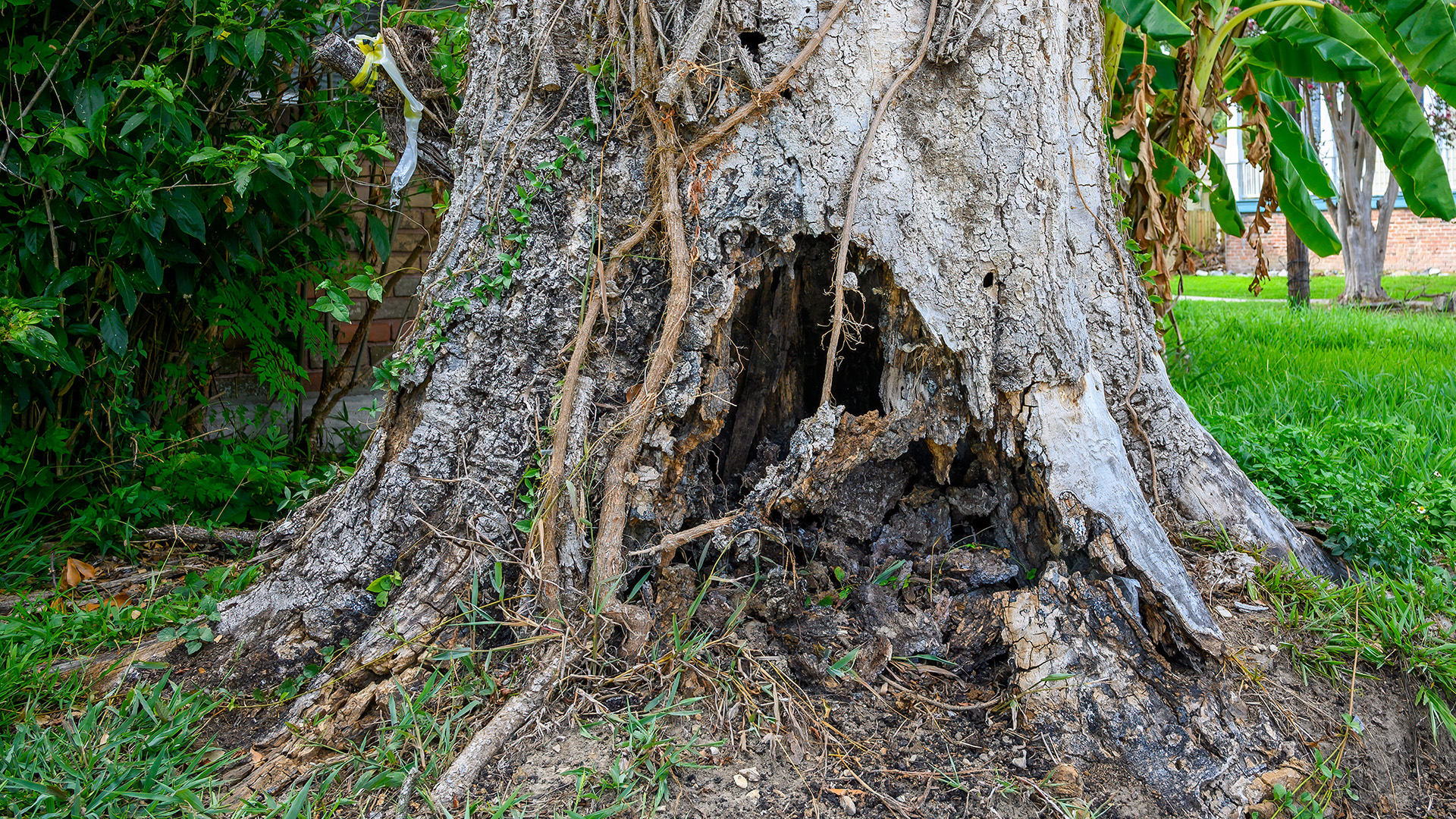
Large cracks, open cavities, or splits in the trunk point to structural weakness. A tree with trunk damage may still be alive, but it may not be strong, and that distinction matters a lot if the tree is near a house, driveway, fence, road, or power line.
Pest Activity
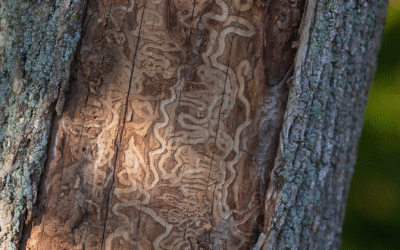
Insects aren’t always the root cause of decline, but they can be part of the problem. Holes in the bark, sawdust-like material, unusual beetle activity, or woodpeckers repeatedly working the same spot are all worth noticing.
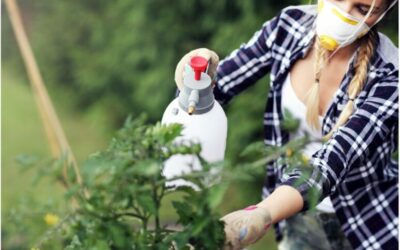
Some invasive pests go after already weakened trees. Others can cause serious damage on their own. Either way, a professional disease or pest evaluation can help figure out what’s actually going on before things get worse.
Exposed Roots or a Sudden Lean
Roots that are visibly exposed, lifted, or damaged can affect the stability of the tree even if the canopy still looks fine. A sudden lean, or one that’s getting more noticeable over time, is one of the more serious signs on this list and usually means the tree’s stability is compromised.
Dying, Dead, Dormant, or Just Stressed?
This is where things get confusing. A tree can look bad without being dead. In the fall and winter, a lot of trees naturally lose their leaves and go dormant. A dormant tree is just resting for the season, not dead. Around here, that can make a perfectly healthy tree look pretty sad for a few months.
A stressed tree is different. It’s still alive, but it’s under pressure from something like drought, compacted soil, root damage, disease, pests, or weather. A stressed tree can often recover if the issue gets caught early enough.
A dying tree is in more serious decline. It may still have some living tissue, but parts of it are failing. A dead tree has no signs of life left and won’t recover.
That difference matters because what you do next depends entirely on which one you’re actually looking at.
Common Reasons Trees Start Dying
A tree usually doesn’t decline from one single thing. It’s more often environmental stress, like drought, poor soil, or compacted ground, combined with physical damage from storms, construction work, or age, that adds up over time.
Root damage is the sneakiest cause, since most of it happens underground. If roots get cut, buried, or compacted during construction, the canopy often won’t show it until a season or two later, long after the actual damage was done.
That delay is exactly why guessing doesn’t work well here. Hentges Tree Service offers tree disease treatment services focused on identifying the actual issue and figuring out the right next step.
When a Dying Tree Becomes Dangerous
A declining tree is one thing. A dangerous tree is another. A tree becomes unsafe when structural issues create real risk of falling limbs or failure, and that risk climbs fast depending on what’s nearby. A leaning, decaying, or structurally weak tree sitting in the middle of a field is a different situation than the same tree hanging over your driveway, your roof, or a power line.
If you’re already seeing several of the signs covered above, especially a worsening lean, trunk cracks, exposed roots, or large dead limbs, and the tree is close to people, vehicles, or structures, that combination is what turns a declining tree into a genuine safety concern.
This doesn’t always mean removal is the first answer, but once safety enters the picture, it needs to move higher up the priority list.
Can You Save a Dying Tree?
Sometimes, yes. Sometimes, no. The first step is figuring out what’s actually causing the decline. A stressed tree often has real options if the cause is found early and the damage isn’t too severe. Drought stress, soil compaction, minor pest issues, and early-stage disease are all things a tree can frequently bounce back from.
A tree is more likely to be too far gone when the damage has reached the trunk, the roots, or most of the canopy rather than staying isolated to a few branches. At that point, it’s not just a tree health question anymore; it may also be a safety question.
Timing matters more than almost anything else here. The earlier a problem gets caught, the more options you usually have. Waiting until most of the canopy is dead or large limbs are already falling narrows those choices fast.
If the tree still has a real chance, treatment or care may make sense. If it’s too damaged or unsafe, tree removal services are the safer option. Nobody loves taking down a mature tree, but it beats letting a failing tree make that decision for you on its own schedule.
What to Do if You Think Your Tree Is Dying
If you’re noticing a combination of the signs above, one easy check is comparing the tree to others of the same type nearby. If it looks noticeably worse than its neighbors, that’s a good signal something’s actually wrong rather than just a normal seasonal thing.
One safety note: this isn’t the time to climb up there yourself or start cutting big branches. If you’re seeing several signs together, especially anything involving large limbs or a tree near structures, calling a professional for a full evaluation is the safer move.
Not Sure if Your Tree Is Dying or Just Stressed?
A professional tree evaluation can help identify signs of decline, check for disease, pest damage, or root issues, and determine whether the tree is likely to recover or needs further action.
Hentges Tree Service helps homeowners throughout Jefferson City, Columbia, the Lake of the Ozarks, and surrounding Mid-Missouri communities understand what’s actually happening with their trees and figure out the safest next step.
Contact us at 573-893-2896 to schedule a service.
FAQ: How to Tell if a Tree Is Dying
What does a dying tree look like?
A dying tree often shows multiple warning signs, such as thinning leaves, dead branches, peeling bark, trunk cracks, or mushrooms near the base. While one symptom alone doesn’t necessarily mean a tree is dying, several appearing together usually deserve a closer look.
How do you revive a dying tree?
It starts with fixing the actual stressors, exposing a buried root flare, adding proper mulch, and watering deeply at the outer root zone instead of right against the trunk. That’s often enough for drought or soil stress, but structural rot, heavy pest infestations, or major canopy loss need a certified arborist to diagnose and treat properly. Contact Hentges Tree Service to have the tree evaluated before any damage becomes irreversible.
Can a tree that looks dead be revived?
Sometimes, yes. A tree that looks dead may actually be dormant or stressed, especially during certain seasons. If it has no buds, brittle branches, peeling bark, or no living tissue at all, it may be dead or too far gone to bring back.
How do you know if a tree is dying and won’t recover?
A tree is unlikely to recover if most of the canopy is dead, the trunk has major decay, the roots are severely damaged, or large limbs are failing. A professional evaluation can help determine whether treatment is still realistic or removal is the safer call.
How can you tell if a tree needs to be cut down?
A tree may need to come down if it’s dead, severely decayed, structurally weak, leaning dangerously, or dropping large limbs regularly. If it’s near a home, driveway, road, or power line, it’s wise to get it evaluated before the risk gets worse
DO YOU NEED HELP?
We’re here to serve you and we provide free estimates.