
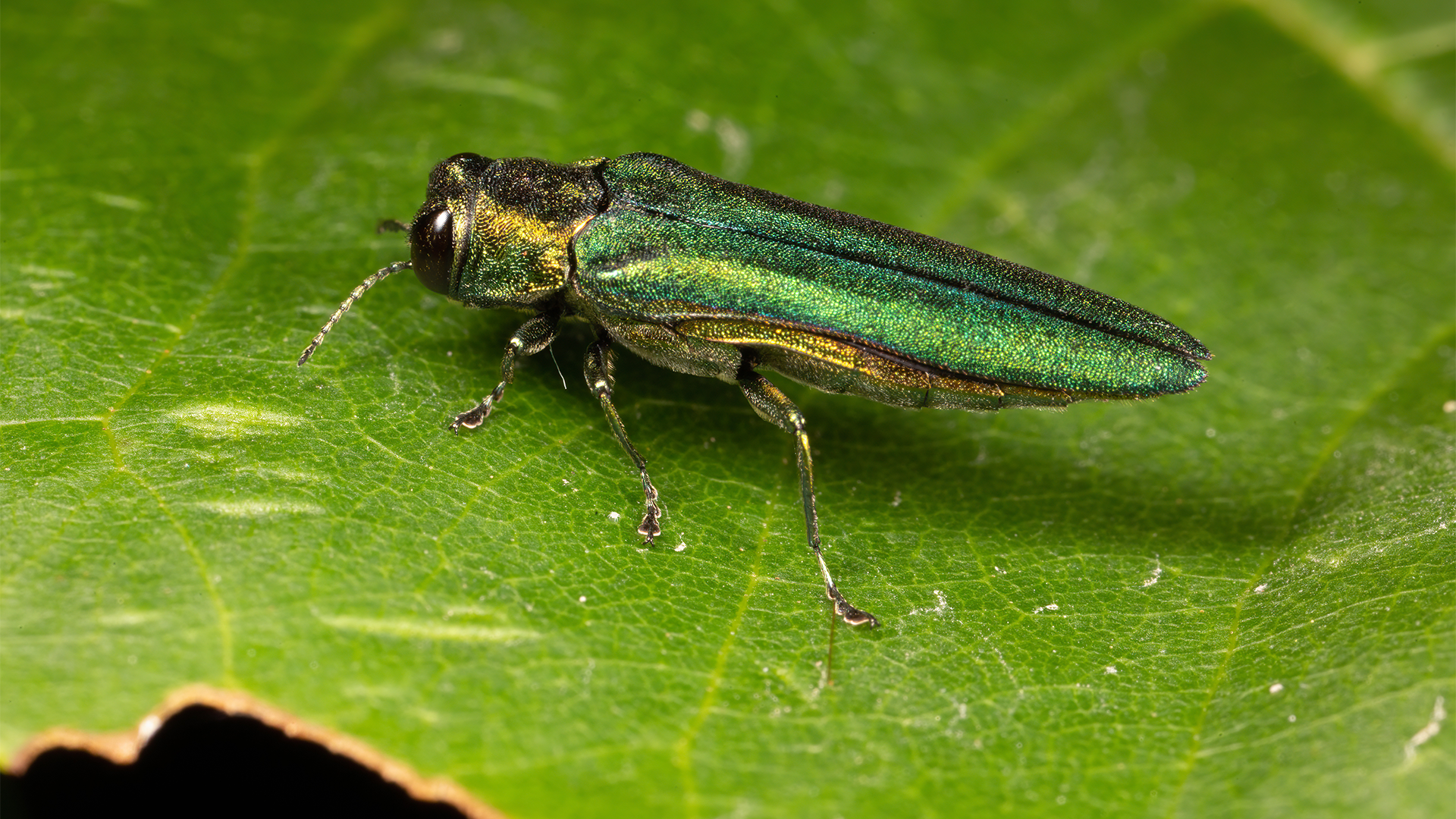
If your ash tree has started thinning out, dropping branches, or looking stressed, it’s natural to wonder what’s causing the decline. In many parts of the United States, one of the most common causes is emerald ash borer, which is why many homeowners begin searching for emerald ash borer signs as soon as they notice unusual changes in their trees.
Emerald ash borer has been responsible for the decline and death of millions of ash trees across North America. But the tricky part is that the most recognizable symptoms do not always appear right away, and some signs can sometimes be mistaken for other tree health issues or environmental stress.
In this guide, you’ll learn the most common emerald ash borer signs, how early symptoms differ from advanced damage, and what those symptoms may mean for the condition of your ash tree.
What Emerald Ash Borer Is and Why Ash Trees Are Dying
Emerald ash borer is an invasive beetle that attacks ash trees. The most damaaging stage is the larval stage. This is when the insect feeds beneath the bark and disrupts the tree’s ability to move water and nutrients through its vascular system, and ultimately can lead to tree death.
This is one of the main reasons ash trees have been dying in so many communities across the country. If you’re not completely sure the tree on your property is an ash, accurate ash tree identification is the first step before drawing conclusions about infestation.
Early Signs of Emerald Ash Borer
Early detection of an infestion can help with timely treatment. That makes the early warning signs especially important.
Canopy Thinning
One of the earliest and most common emerald ash borer symptoms is thinning in the upper canopy. The leaves may become sparse, and the top of the tree may begin to look weak or uneven compared to the rest of the crown.
This often happens because the larvae are already disrupting nutrient flow beneath the bark. In many cases, canopy thinning appears before more obvious trunk-level signs show up.
Increased Woodpecker Activity
Heavy woodpecker activity can be another early clue. Woodpeckers often feed on larvae beneath the bark, so increased pecking on an ash tree may indicate emerald ash borer activity.
This feeding can create lighter patches on the bark, often called ash blonding, where the darker outer bark has been chipped away and the lighter inner bark becomes visible.
Epicormic Shoots
Small sprouts growing from the trunk or lower part of the tree can also be a sign of stress. These are called epicormic shoots, and they often appear as the tree tries to compensate for canopy decline.
While trunk sprouts may indicate emerald ash borer activity, they can sometimes be mistaken for other tree problems, so they should be considered alongside other symptoms.
What Emerald Ash Borer Damage Looks Like
As the infestation progresses, homeowners may begin to notice more obvious emerald ash borer damage on the trunk, branches, or bark.
Bark Splitting
Vertical cracks or splits in the bark can be a sign of infestation. As larvae feed underneath, the bark may begin to separate or split, sometimes exposing the tunnels beneath.
Bark splitting can be a sign of infestation, but it can sometimes be mistaken for other causes of tree stress or injury.
D-Shaped Exit Holes
One of the more specific signs of emerald ash borer infestation is the presence of small, D-shaped exit holes in the bark. These holes are left by adult beetles as they emerge from the tree.
Their flat-bottomed shape helps distinguish them from some other insect holes, but they can still be easy to miss without close inspection.
Serpentine Galleries
Beneath the bark, emerald ash borer larvae create winding S-shaped tunnels, sometimes called serpentine galleries or EAB mines. These tunnels interfere with the movement of water and nutrients through the tree.
Homeowners do not always see these tunnels unless bark has peeled away or sections have broken loose, but they are one of the clearest forms of ash borer damage when visible.
Early vs. Advanced Signs of Emerald Ash Borer
| Stage | Common Signs |
| Early infestation | canopy thinning, woodpecker activity, small trunk shoots |
| Moderate damage | bark splitting, ash blonding, visible exit holes |
| Advanced decline | large branch dieback, major canopy loss |
This comparison can help you interpret symptoms more clearly and avoid assuming that every sign means the tree is already beyond help.
Mistakes to Avoid When Looking for Emerald Ash Borer Signs
A few common mistakes can make ash tree decline more confusing than it needs to be.
Assuming Every Dying Ash Tree Has Emerald Ash Borer
Not every declining ash tree is automatically infested. Some symptoms can overlap with drought stress, root problems, storm damage, or other health issues.
Ignoring Early Warning Signs
Canopy thinning, woodpecker activity, and small trunk shoots can seem minor at first. But in many cases, those are the earliest visible clues that something more serious may be happening.
Waiting for Severe Damage Before Investigating
By the time bark is splitting heavily and large sections of the canopy are dead, the infestation may already be advanced. Early evaluation often gives homeowners more clarity and, in some situations, more options.
Confusing Stress Symptoms with a Confirmed Diagnosis
Symptoms may indicate emerald ash borer activity, but they do not always confirm it on their own. That distinction matters, especially when decisions about monitoring, treatment, or removal may be needed.
What to Do If You Suspect Emerald Ash Borer
If your ash tree is showing multiple symptoms, the next step is not to panic. It’s to look at the tree carefully and evaluate the full picture.
Symptoms alone may not confirm infestation. Early evaluation can help determine whether emerald ash borer may be present, how advanced the decline appears to be, and whether the tree may still be a candidate for emerald ash borer treatment or closer monitoring.
Professional Tree Evaluation & Next Steps
If you live in Mid-Missouri, including Jefferson City, Columbia, Lake of the Ozarks, or surrounding communities, a professional arborist can inspect ash trees and determine whether emerald ash borer may be present.
Hentges Tree Service can provide:
- Tree inspections
- Insect and mite control service
- Guidance on possible tree disease treatment options
The goal is not to jump straight to a conclusion, but to understand what may be affecting the tree and what next step makes the most sense based on its condition.
FAQ — Emerald Ash Borer Signs
How do I know if I have an emerald ash borer?
Look for symptoms such as canopy thinning, bark splitting, woodpecker activity, and D-shaped exit holes. These signs may indicate infestation, though confirmation may require closer inspection.
What are the early signs of emerald ash borer?
Early signs often include thinning leaves in the upper canopy, increased woodpecker activity, and small shoots growing from the trunk.
What does emerald ash borer damage look like?
Damage may include bark splitting, S-shaped tunnels beneath the bark, ash blonding, and small D-shaped exit holes left by adult beetles.
Can a tree recover from an emerald ash borer?
Recovery depends on tree health and how early the infestation is detected. Trees evaluated and treated earlier often have better outcomes than trees in advanced decline.
What should I do if my ash tree shows these signs?
Monitoring the tree and consulting an arborist can help determine whether emerald ash borer may be present and what next steps may be appropriate.
Final Takeaway — Understanding Emerald Ash Borer Signs
Recognizing emerald ash borer signs early can help property owners better understand what may be affecting their trees. Symptoms such as canopy thinning, bark splitting, and exit holes may indicate infestation, though careful inspection is often needed to confirm the cause.
Not sure if your ash tree may be showing signs of emerald ash borer? A professional evaluation can help determine what may be affecting the tree and whether treatment or monitoring may be appropriate.
If you’re in Mid-Missouri, including Jefferson City, Columbia, or the Lake of the Ozarks, Hentges Tree Service can provide a professional tree inspection to help evaluate the condition of your ash trees.
DO YOU NEED HELP?
We’re here to serve you and we provide free estimates.
