

Ash tree identification can be confusing—especially when you’re standing in your yard comparing your tree to photos online. Ash trees share traits with several common species, and no single feature (like bark alone) is enough to confirm an ID.
This guide walks you through a simple, reliable way to identify an ash tree by focusing on what matters most: branching first, then leaves, followed by bark and seeds. It’s designed to help homeowners make sense of what they’re seeing without needing technical training or guesswork.
Quick Answer: How to Identify an Ash Tree
Ash trees are identified by a combination of opposite branching, compound leaves with usually 5–11 leaflets, and diamond-shaped bark on mature trunks. No single feature confirms identification on its own—reliable ash tree identification comes from checking multiple traits together, which vary by season and tree age. Using leaves and branching during the growing season, and bark and buds in winter, provides the highest confidence.
What Does an Ash Tree Look Like
At a glance, an ash tree is a medium to large deciduous tree with an upright trunk, an open canopy, and compound leaves. However, many trees share a similar overall appearance, which is why ash tree identification should never rely on shape alone. Instead, correct identification depends on checking branching patterns first, followed by leaves, bark, and seeds.
60-Second Ash Tree Identification Checklist
This checklist shows how to spot an ash tree quickly by focusing on the traits that matter most and ignoring misleading lookalikes.
☐ Branches and buds grow opposite each other
☐ Ash leaves are compound, not single (usually 5–11 leaflets)
☐ Mature bark shows diamond-shaped ridges
☐ Seeds (if present) are single-winged samaras
Note: Relying on only one trait often leads to misidentification.
Step 1: Check the Branching Pattern (Start Here)
This is the fastest way to rule ash in or out.
Opposite vs. Alternate Branching (in plain English)
Opposite branching means pairs of buds or branches sit directly across from each other at the same point on the twig.
Alternate branching means buds/branches stagger as you move down the twig.
Why branching is your best first filter
- Opposite branching: ash, maple, dogwood (a short list)
- Alternate branching: oak, elm, hickory, walnut (not ash)
If the branching is alternate, it is not an ash.
Quick tip: Look at a small twig at eye level. If you see a “pair, pair, pair” pattern, keep going to Step 2.
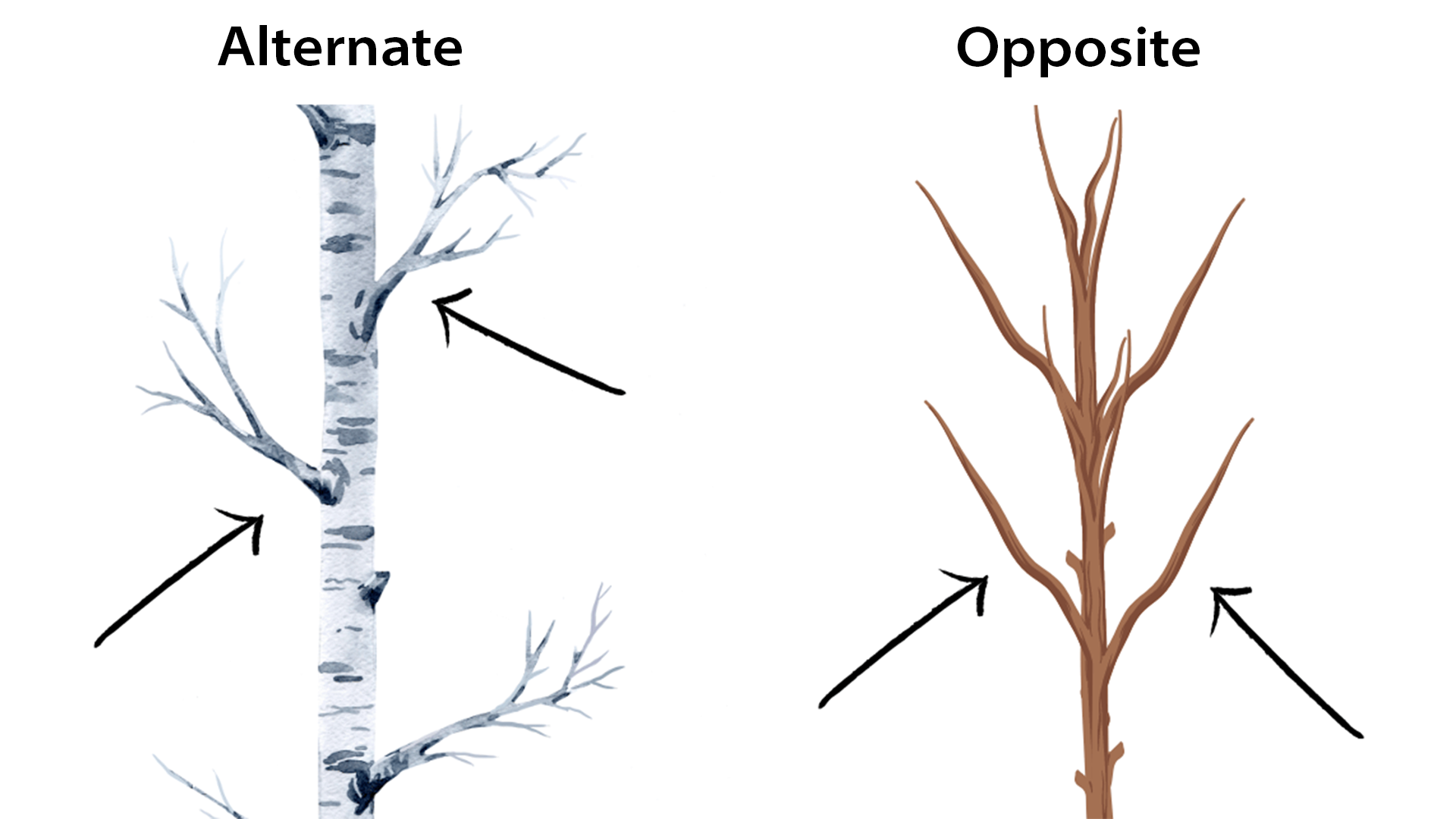
Step 2: Ash Tree Leaf Identification (Compound Structure)
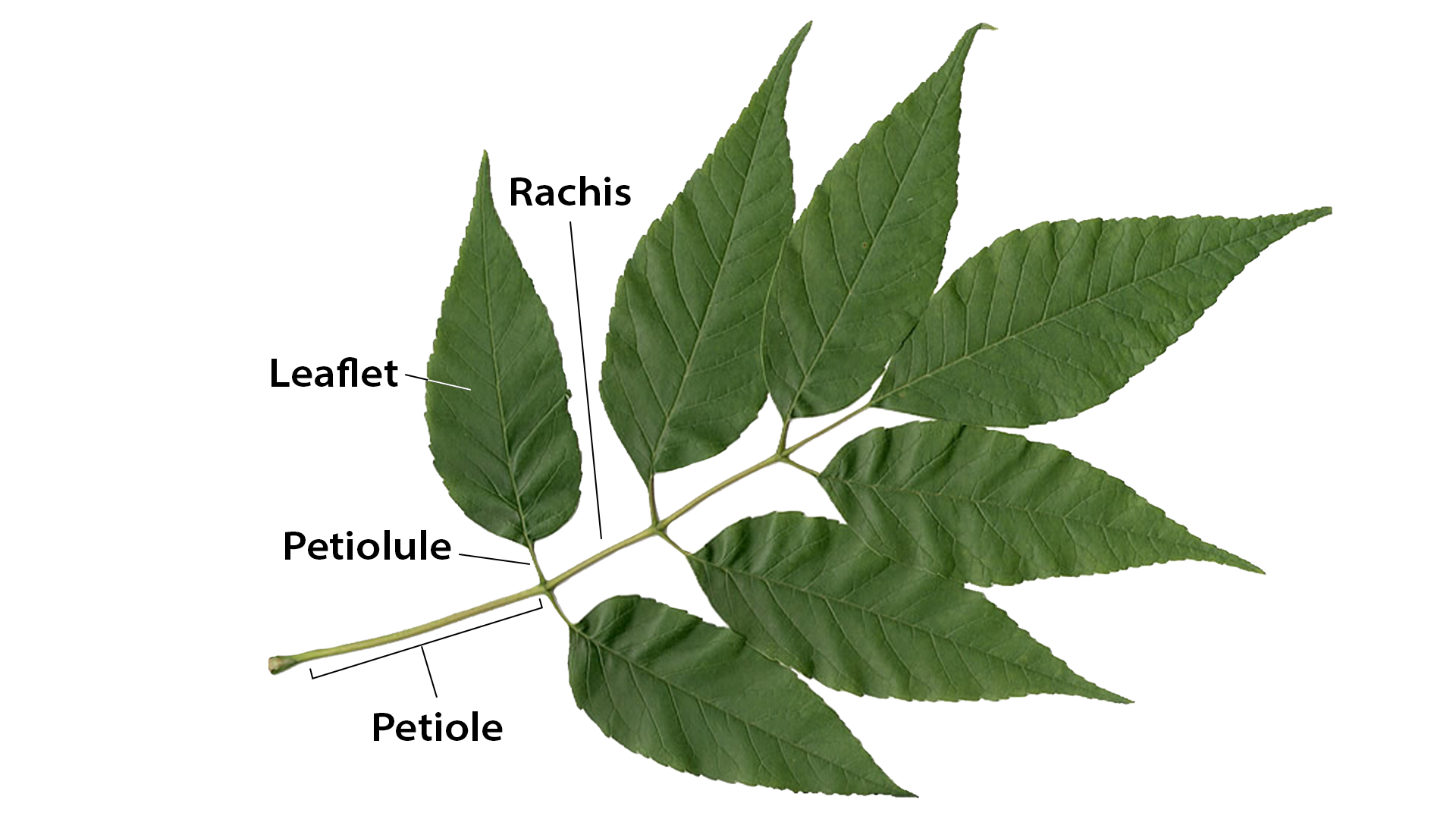
The leaves of an ash tree are compound, which means one “leaf” is actually made up of multiple leaflets.
Don’t mix up “leaf” vs. “leaflet”
A common mistake is pointing to one leaflet and calling it “the leaf.” On an ash tree, the whole leaf includes:
- one central stem (the rachis)
- multiple leaflets attached along it
Typical ash leaf traits
Most ash trees have:
- 5–11 leaflets (often 7–9)
- leaflets that are oval to lance-shaped
- edges that may be smooth or lightly toothed
- leaves that attach oppositely on the twig
If you have opposite branching + compound leaves, you’re often in “high confidence” territory (we’ll confirm that below).
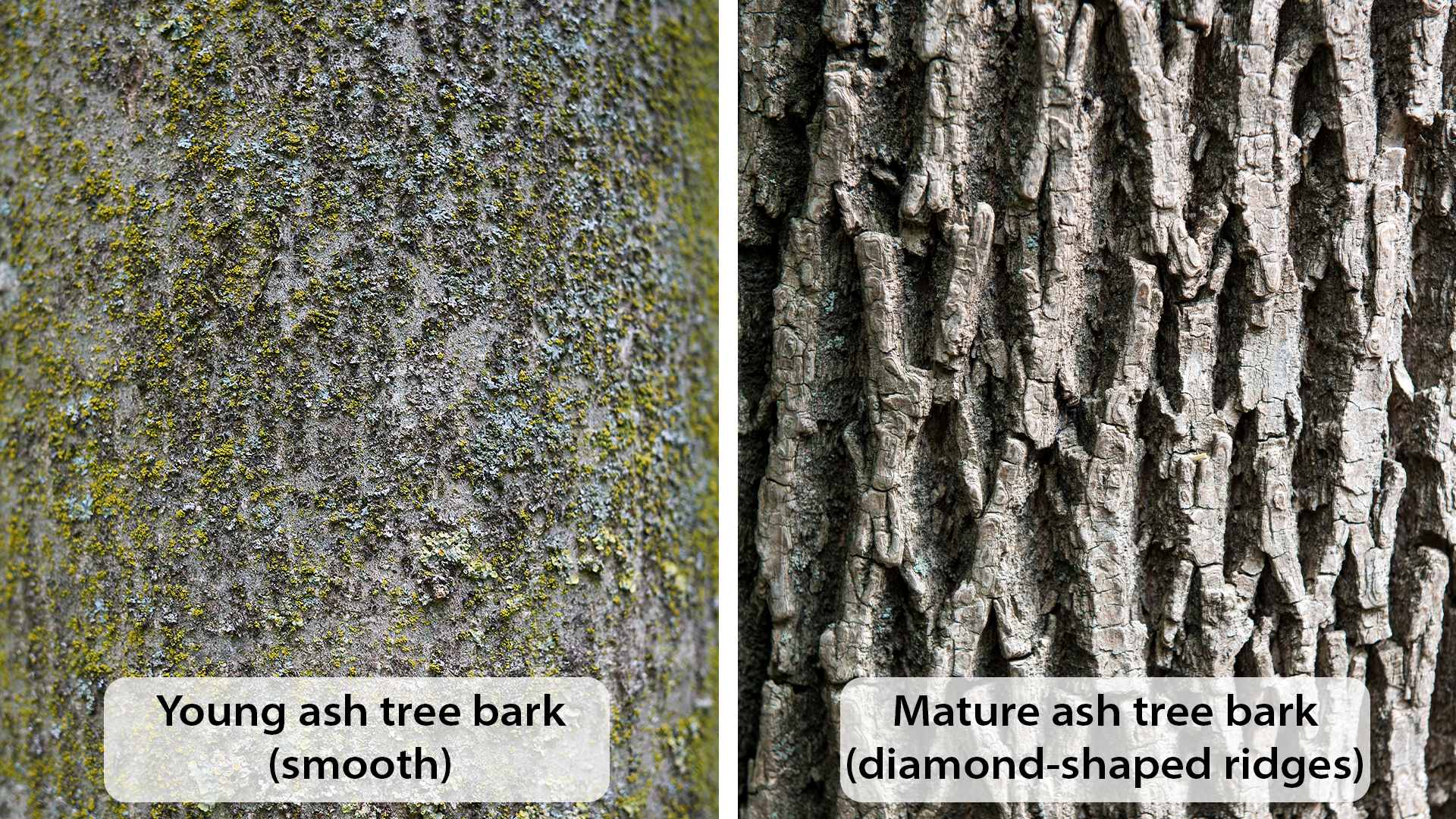
Step 3: Ash Tree Bark Identification (Mature Trees Only)
Ash bark can help—but only on mature trees.
What does the bark on an ash tree look like (by age)
- Young ash trees: bark is often fairly smooth or lightly textured
- Mature ash trees: gray to gray-brown bark with distinct diamond-shaped ridges
Common mistake to avoid
Don’t rely on bark alone—especially on younger trees. Diamond bark develops with age and can be unreliable on saplings.
Step 4: Check Seeds (Samaras), If Present
Seeds are a helpful “bonus clue” when you can find them.
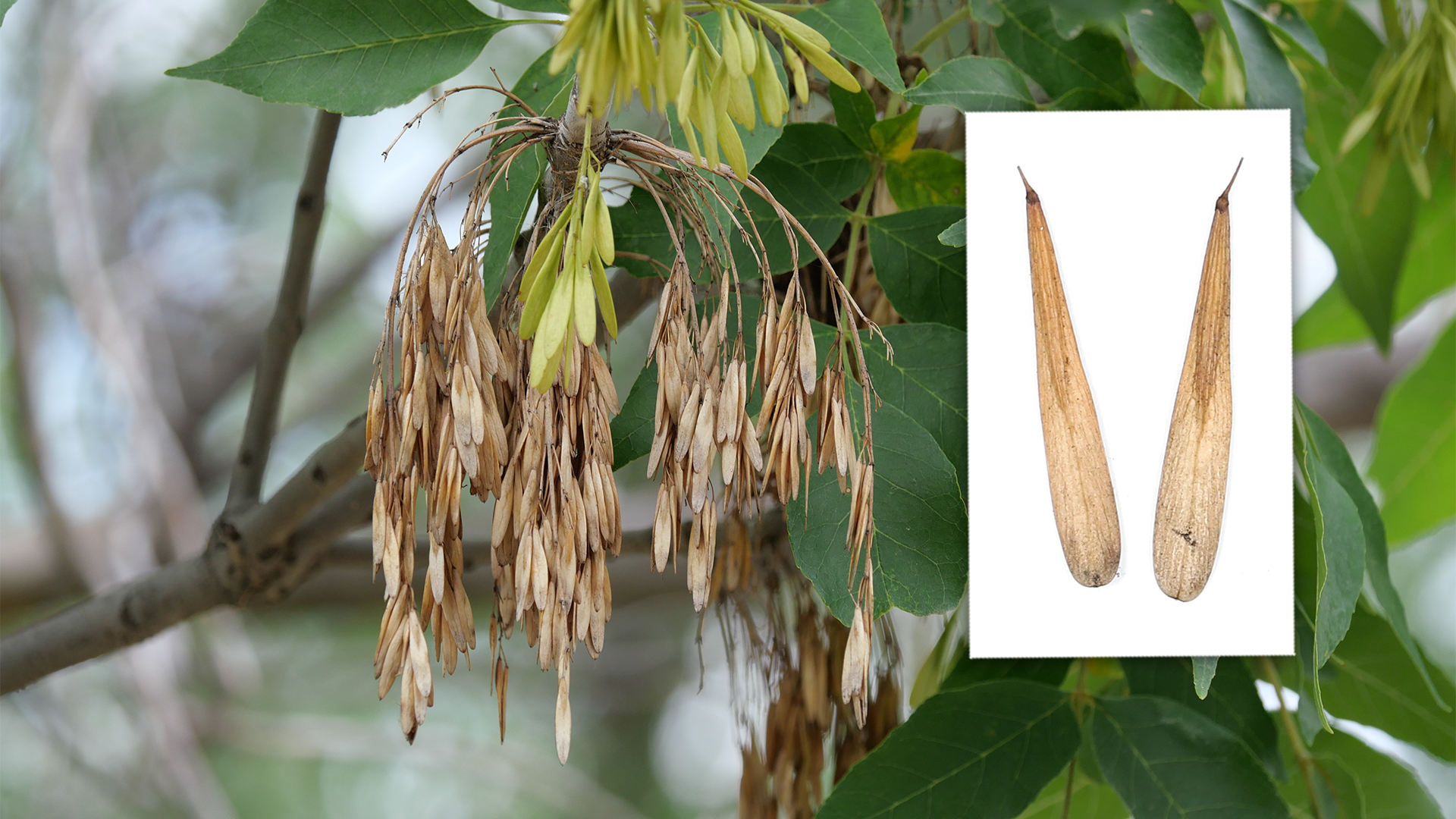
Ash seeds are:
- single-winged
- paddle- or oar-shaped
- often hanging in clusters
Quick contrast: Maple seeds are paired (“helicopters”).
Step 5: Use Overall Tree Form for Confirmation Only
Overall ash tree characteristics — such as size, growth habit, and canopy shape — can help support identification, but they should never be used as the primary test.
Ash trees are often:
- medium to large deciduous trees
- upright trunk with an oval to rounded crown
Reminder: Shape supports ID—it doesn’t prove it.
How Confident Is Your Ash Tree Identification?
Use this simple confidence framework to avoid “false positives.”
High confidence
- Opposite branching AND
- Compound leaves observed
Moderate confidence
- Opposite branching AND
- Diamond bark on a mature tree (common in leaf-off seasons)
Low confidence
- Ash tree bark alone
- Ash tree leaf shape alone
- Any single trait only
Identifying Ash Trees by Season
Ash tree identification changes depending on what you can see right now.
Spring / Summer
Best clues:
- compound leaves + opposite branching
- ash tree foliage that appears light to medium green with a fairly open canopy
Fall
- Ash tree leaves in fall can still help
- seed clusters may be visible
- leaf color alone isn’t reliable
Winter
Yes, ash tree identification in winter is possible if you use multiple traits:
- opposite branching
- diamond bark on mature trees
- hanging samaras (if present)
Identifying Young Ash Trees and Saplings
Young trees are the most commonly misidentified because bark hasn’t “matured” yet.
For younger trees, focus on:
- opposite branching
- compound leaf structure
And again: don’t treat bark as your deciding factor at this stage.
Trees Commonly Mistaken for Ash
Here are quick eliminators to reduce confusion.
- Oak: simple leaves, alternate branching
- Elm: alternate branching, uneven leaf bases
- Hickory / Walnut: alternate branching, nuts (not samaras)
- Boxelder (maple): opposite branching, usually only 3–5 leaflets
- “Mountain ash” / “prickly ash”: not true ash trees (name confusion)
Do You Need to Identify the Exact Type of Ash?
Most homeowners only need to confirm ash vs. not ash. Species-level ID (white vs. green vs. black ash) is situational and usually only matters when a recommendation depends on it.
Why Correct Ash Tree Identification Matters
Getting the ID right helps you:
- communicate clearly with a professional if you ever need to
- avoid unnecessary assumptions or work
- plan responsibly for your property
If you’re planning landscape changes, construction, or long-term tree care, knowing exactly what type of tree you’re dealing with makes those decisions easier and more accurate.
Ash Tree Identification FAQs
If you’re still unsure after checking branching, leaves, and bark of ash tree, these common questions can help confirm whether the tree on your property is an ash.
How do I tell if I have an ash tree?
Use at least two traits together—opposite branching plus compound leaves or mature bark.
How do you identify ash vs. oak trees?
Ash has opposite branching and compound leaves; oak has alternate branching and simple leaves.
What does an ash tree leaf look like?
A compound leaf made up of multiple leaflets attached to a single stem.
Can you identify an ash tree in winter?
Yes—by using opposite branching, mature bark patterns, and seed clusters if present.
When to Get a Professional Tree Assessment
Consider hiring an arborist when:
- multiple traits don’t clearly align
- safety, planning, or tree health decisions depend on accuracy
The goal is confirmation—not pressure.
Conclusion: Identify with Confidence, Not Guesswork
Ash tree identification works best when you follow the “two-trait rule”: branching + leaves (or branching + mature bark when leaves are gone). Guessing based on a single photo or one trait is what causes most misidentifications.
If you’re in Jefferson City, Columbia, or surrounding Mid-Missouri areas and your next steps depend on getting it right, a professional tree assessment can help you make confident, informed decisions about your property. You can reach out to Hentges Tree Service for an evaluation when accuracy matters.
DO YOU NEED HELP?
We’re here to serve you and we provide free estimates.


