
Prevention is appropriate for ash trees that are still healthy and not showing clear signs of infestation. If your ash tree is already thinning, losing branches, or showing bark damage, it’s time to move from prevention to assessment and possibly intervention.
That doesn’t automatically mean the tree needs to be removed, but it does mean you need a clearer understanding of its condition. A professional assessment can determine whether the tree is actually an ash, how much decline has occurred, whether the symptoms point to emerald ash borer (EAB) or another issue, whether EAB treatment is still a viable option, and whether the tree presents any safety concerns.
Here’s what you should know about protecting your ash trees before serious damage shows up.
Why Emerald Ash Borer Is Such a Problem
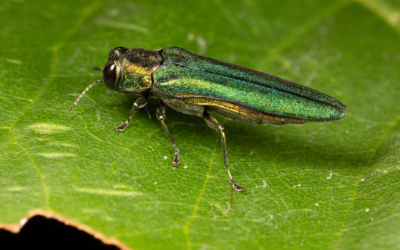
Emerald ash borer, often called EAB, is an invasive beetle that targets ash trees specifically. The adult beetle is small, but the real damage happens under the bark where you can’t see it. The larvae feed inside the tree and disrupt the flow of water and nutrients. In plain terms: they mess with the tree’s plumbing.
The tricky part is that damage often builds before you notice anything from the ground. A tree can look mostly fine for a while, even with trouble already brewing under the bark. Trees are tough, but they’re not great at letting you know something is wrong until the problem is already established. That’s exactly why prevention and monitoring matter.
How to Help Prevent Emerald Ash Borer Damage
Prevention isn’t one thing. It’s usually a combination of tree maintenance, regular monitoring, and in some cases professional preventive treatment. Here’s how to think through each.
Keep the Tree as Healthy as Possible
A healthy tree handles stress better than one that’s already struggling. Good basic care includes reducing soil compaction around the root zone, avoiding unnecessary damage to roots or bark, watering during extended dry stretches, and keeping mulch reasonable and away from the trunk. This doesn’t make a tree immune to EAB, but it reduces extra stress. And a stressed tree has a much harder time dealing with pests, weather, and everything else Missouri likes to throw at it.
Watch for Early Warning Signs
Regular monitoring is one of the most important parts of prevention. You’re looking for emerald ash borer signs that suggest the tree has moved from “at risk” to “possibly infested.” Keep an eye out for thinning in the upper canopy, dead branches near the top, bark splitting, increased woodpecker activity, small D-shaped exit holes in the bark, or new shoots growing from the trunk or lower branches.
Be Careful With Firewood Movement
One of the ways EAB spreads is through infested wood. Moving firewood from one area to another moves the pest right along with it. The simple rule: buy firewood close to where you plan to burn it. That may not sound like much, but hauling wood across counties from unknown sources helps invasive pests travel much farther than they would on their own.
Consider Preventive Treatment for Valuable Trees
For healthy ash trees that matter to your property, professional preventive treatment may be worth discussing before symptoms appear. This is especially relevant if EAB is known to be active nearby or the tree is mature and significant to your yard.
This isn’t the place for grabbing a random product off the shelf and hoping for the best. Preventive treatment depends on tree size, condition, timing, and local pest pressure. Hentges Tree Service offers insect and mite control services that include pest evaluation and preventive treatment planning for situations like this.
A Simple Prevention Checklist
Not sure if you’re staying ahead of the issue or just hoping for the best? Run through these:
- Do you know for sure the tree is an ash?
- Does the tree look healthy right now?
- Have you checked the upper canopy for thinning?
- Have you looked for bark damage, woodpecker activity, or dead limbs?
- Is EAB known to be a concern in your area?
- Are you avoiding firewood from unknown or distant sources?
- Have you considered a professional evaluation before visible decline appears?
If you answered no to several of these, that doesn’t mean the tree is in trouble. It means you may not have enough information yet, and with EAB, waiting until the tree looks rough isn’t a great strategy.
When Prevention Is No Longer Enough
Prevention is for trees that are still healthy and not showing clear signs of infestation. If your ash tree is already thinning, dropping branches, or showing bark damage, it’s time to shift from prevention to evaluation.
That doesn’t automatically mean the tree has to come down. But it does mean you need a clearer picture of what’s actually going on. A professional can assess whether the tree is a real ash, how much decline is present, whether signs point to EAB or something else, whether EAB treatment is still realistic, and whether the tree poses any safety concern.
That kind of evaluation helps you avoid the two worst outcomes: doing nothing when action is needed, or spending money solving the wrong problem.
Protecting Ash Trees in Mid-Missouri
In Jefferson City, Columbia, the Lake of the Ozarks, and surrounding communities, a lot of properties still have mature ash trees worth protecting. The best time to think about how to prevent emerald ash borer is before the tree shows serious decline. Once damage is advanced, the options get more limited and more expensive.
Hentges Tree Service helps homeowners throughout Mid-Missouri identify ash trees at risk, assess potential EAB concerns, and develop a practical plan before serious damage occurs.
Call us at 573-893-2896 to schedule a service.
FAQ: How to Prevent Emerald Ash Borer
Can emerald ash borer be prevented?
Risk can often be reduced, especially when action is taken before visible damage appears. Prevention depends on tree health, timing, local pest pressure, and whether the tree is a good candidate for preventive care.
What’s the best way to prevent emerald ash borer?
A combination of confirming the tree is an ash, monitoring it regularly, keeping it healthy, avoiding movement of infested wood, and considering professional preventive treatment when appropriate.
Can you prevent emerald ash borer naturally?
Good tree care supports overall health, but natural methods alone may not be enough to protect a valuable ash tree. For mature trees, professional guidance is usually the more reliable path.
When is it too late to prevent emerald ash borer?
Once the tree is showing clear signs of infestation or significant decline, prevention has passed. At that point, treatment evaluation or removal assessment is the more appropriate next step depending on the tree’s condition.
Does emerald ash borer go away on its own?
No. If an ash tree is infested, the damage typically continues and worsens without intervention.
DO YOU NEED HELP?
We’re here to serve you and we provide free estimates.