
Summer’s over, and that bare spot in your yard is still bare. Good news: planting trees in the fall can be one of the better times to do it.
Cooler air puts less stress on a new tree, and the soil stays warm enough for roots to keep working even after the top of the tree slows down for the year. University of Missouri Extension‘s own forestry specialists call fall the preferred season for planting trees, since summer heat is tougher on a new one to handle.
That doesn’t mean you can dig a hole in November and call it good, though. Timing, species, planting depth, water, and where you put it all still matter.
Here’s what you need to know before putting a new tree in the ground this fall.
Why Fall Works for Tree Planting
Your newly planted tree has one job: get its roots established. That job gets a lot easier once the weather cools down.
Plant in the middle of a mid-Missouri summer and your tree’s fighting high heat, losing water fast, and dealing with dry soil, all while it’s still trying to recover from being moved. Fall takes a lot of that pressure off. Cooler air means less heat stress, and moisture’s a lot easier to keep on top of.
The soil doesn’t cool off nearly as fast as the air does, either. Even after the leaves drop and things slow down up top, your tree’s roots can keep growing in soil that’s still working in their favor.
That head start lets a fall-planted tree settle in some before winter hits.
How Late Is Too Late to Plant a Tree?
There isn’t one magic date on the calendar when fall tree planting suddenly stops working.
Weather changes year to year, and what’s happening around Jefferson City might not match what’s going on at the Lake of the Ozarks. The better rule is to plant while the soil is still workable and before the ground freezes.
Earlier in fall is usually better since your tree has more time to start building roots before it goes fully dormant for winter. We recommend getting trees in the ground early enough in the season to build up real root mass before the cold really settles in.
If the ground is already frozen or you’re getting hard freezes regularly, spring is probably your better bet.
Trees That Do Well Planted in Fall
Plenty of hardy deciduous trees make good picks for fall planting, but the right one for you still comes down to your soil, sunlight, space, and drainage.
Here are a few that tend to do well on mid-Missouri properties:
- Red oak: A large shade tree that does well in full sun and well-drained soil. Give it room to grow. This one gets big.
- River birch: A good option if you want a medium-to-large shade tree. It handles Missouri’s hot, humid summers just fine.
- Trident maple: A smaller option that fits tighter spaces while still giving you shade and fall color.
- Other hardy native or locally adapted trees: Worth a look, since they’re already built for Missouri’s growing conditions.
Here’s the bigger point: the “best tree” isn’t just the one that looks good sitting at the nursery.
You need to think about how big it’ll be 20 years from now, how much sunlight the spot gets, what kind of soil you have, and whether the roots and branches will have enough room.
Our professional tree selection service helps you match the right tree to the right spot based on all of that.
Are There Trees You Shouldn’t Plant in the Fall?
Fall works well for many trees, but not every tree or every situation is a good fit.
Bare-root trees are usually better planted dormant in late winter or early spring, not fall. Some less cold-hardy species also do better with a full growing season under their belt before facing their first winter.
Getting It in the Ground Right
Good timing doesn’t make up for bad planting.
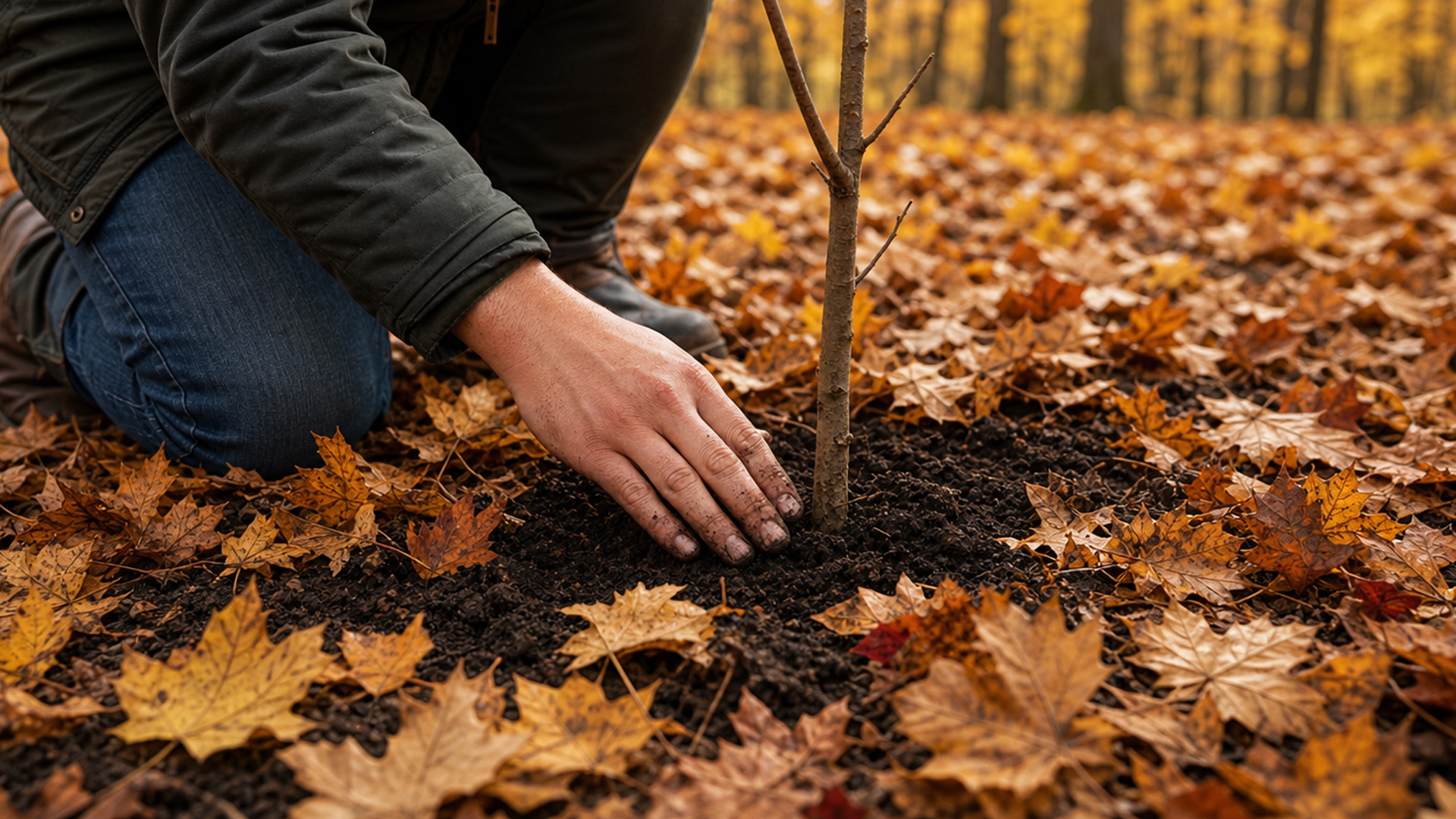
A common mistake is planting the tree too deep. Most of a tree’s actual feeder roots stay pretty close to the surface, so if you bury the root ball too deep, you’re creating problems before the tree’s even had a chance. You should be able to see the root flare, where the trunk starts widening into the main roots, right around ground level.
Keep watering, even once things cool off. New trees still need moisture, so water deeply around the root zone after planting and keep checking the soil during dry stretches. The goal is moist soil, not mud, since too much water can starve roots of oxygen just as too little water can dry them out. Healthy roots are what carry water and nutrients into the rest of the tree, which is why proper care for your tree’s roots matters from the beginning.
Mulch finishes the job. A two-to-four-inch layer helps conserve moisture and protect soil conditions, but keep it away from the trunk. Piling mulch against the bark traps moisture where you don’t want it. For more on how much mulch to use and where to place it, check out our guide to mulching a tree.
Plant It Yourself or Call a Pro?
Planting a small tree yourself is doable if you have a handle on the site, planting depth, watering, and how big it’ll get.
The harder part is usually what comes before the shovel ever hits the dirt: is this the right species for your soil? Will it fit the space when it matures? Is the drainage good enough? Are nearby structures, utilities, or existing trees going to become a problem later? Getting those decisions right matters more than saving a little time on planting day.
A tree is a long-term part of your property. Think past what it looks like sitting in a five-gallon container. If you’re tackling other fall yard work too, our fall tree checklist covers the rest of what your trees need this time of year.
Thinking About Planting a Tree This Fall?
Choosing the right tree for the right spot can make a big difference in how well it grows and performs over time.
Hentges Tree Service helps homeowners throughout Jefferson City, Columbia, the Lake of the Ozarks, and surrounding mid-Missouri communities choose trees based on their property, soil, sunlight, available space, and long-term goals.
Contact us at 573-893-2896 to schedule a tree selection consultation.
DO YOU NEED HELP?
We’re here to serve you and we provide free estimates.