
Most construction damage to a tree happens where you cannot see it. Equipment packs the soil, trenches cut through roots, and the tree can look fine for a long time before it starts to decline.
A tree can survive a building project when you plan for it before the work starts. Here is what construction does to the roots, what protection looks like, and what to tell your builder.
What Construction Does to a Tree’s Roots
Tree roots do not grow deep. Most of them stay in the top layer of soil and spread well past the branches. The root zone is the soil under and around the tree where roots take in water, air, and nutrients. Construction happens right on top of it.
Four things cause most of the harm to a tree during a project.
Soil Compaction
Compaction is soil pressed so tight that air and water cannot move through it. One pass from a loaded truck or an excavator can do it, and the roots below lose the oxygen they need.
Trenching
Trenching is digging a narrow channel for a utility line, a drain, or a septic line. A trench through the root zone cuts roots, and the tree loses part of what feeds and anchors it.
Grade Change
A grade change is adding or removing soil so the ground sits higher or lower than before. Fill piled over roots cuts off their air. Soil scraped away takes the top roots with it.
Direct Damage
Machines and materials scrape bark and break limbs. Wounds in the bark open the door to decay and pests.
A tree that loses a large share of its roots often looks normal for a season or more. Then the leaves thin out and branches start to die back. The damage can show up years after the crew has left, which is why the project rarely gets the blame.
Many trees survive construction. The result depends on how much of the root zone the work touches and whether the tree is protected before the equipment shows up.
What Protecting a Tree Looks Like
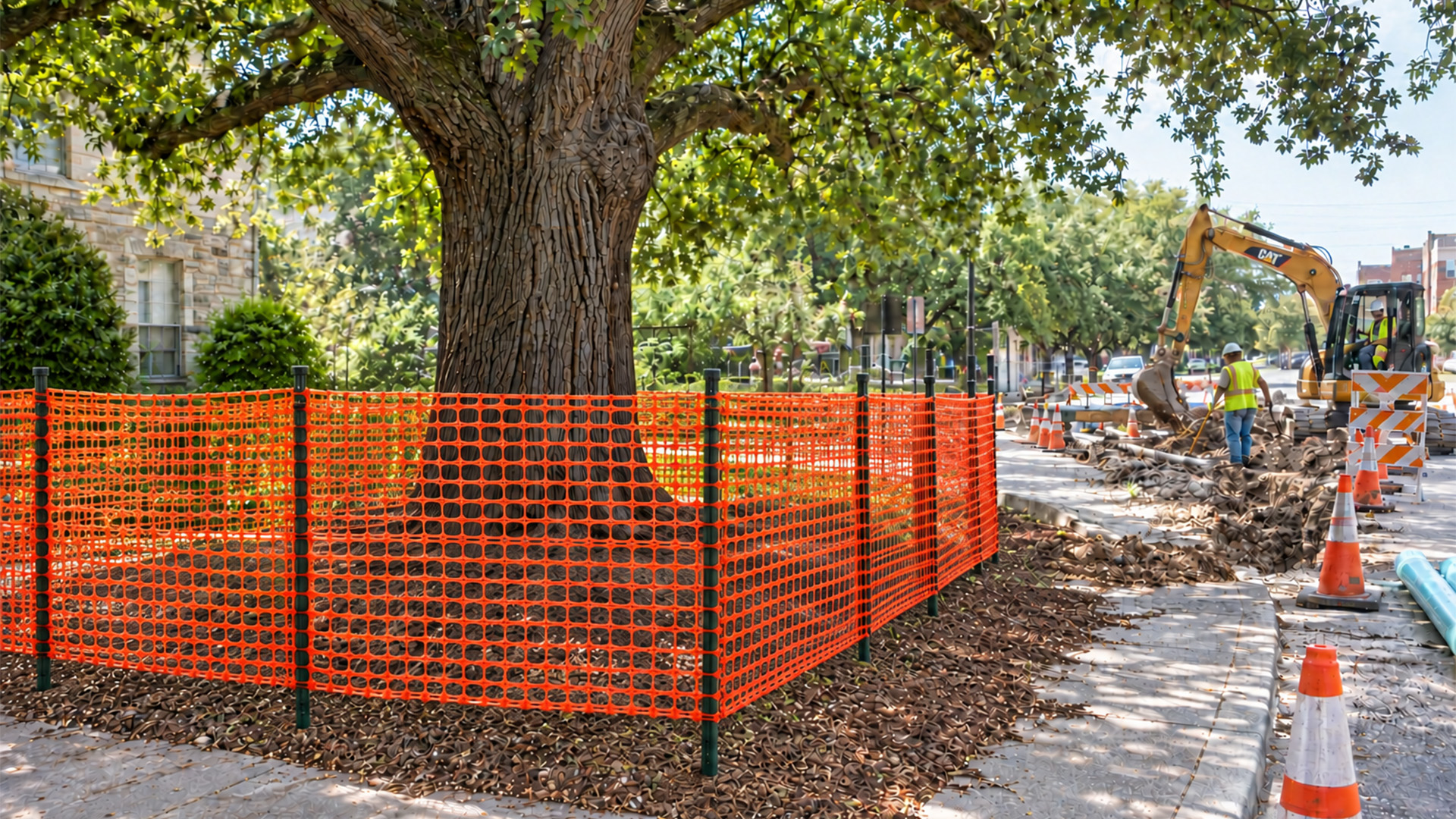
Protecting a tree means keeping the work away from its roots. A sturdy fence marks off the protected area around the tree, and machines and materials stay outside it. Mulch over the root zone cushions the soil and holds moisture. A marked route keeps trucks and equipment off the roots.
The plan comes first. Our pre-construction tree protection service starts with certified arborists who review the trees and the building plans, then decide what each tree needs.
What to Tell Your Builder Before Work Starts
Builders have a lot to schedule, and trees are rarely on the list unless you put them there. Bring these up before work begins:
- Which trees you want to keep, pointed out on the site and marked on the plans
- Where equipment will drive, park, and turn around
- Where utility, drain, and septic trenches will run
- Where soil, materials, and dumpsters will be stored
- Who is responsible for keeping everyone out of the protected area
Then bring in an arborist before any digging or grading starts. Once equipment packs the soil or cuts the roots, the options shrink.
Is Protecting the Tree Your Builder’s Job?
Most builders do not handle this themselves. Builders know construction. Arborists know trees. Those are two different skills, and the best results come when both work from one plan. That is why our crew coordinates with your builder, excavator, and site supervisor on the equipment route and the fencing.
Which Trees Should You Try to Save?
Some trees are better candidates than others. Three things help you decide.
Start with health. A healthy tree has far more reserves to recover from stress than one that is already thinning or decaying. Next, consider the size. A mature tree takes decades to replace, and a young one will not match its shade for a long time. Finally, consider how much of the root zone the project will touch. A tree with a small share of its roots affected has a better chance than one with a trench cut straight through them.
Sometimes a tree cannot be saved. It may sit where the foundation goes, or it may already be in decline. When our arborists walk the site, they tell you which trees can stay and recommend tree removal for the ones that cannot.
What to Watch For After the Work
Damage from construction shows up slowly. Watch the tree for the next few years, and look for these signs of a dying tree:
- Leaves that are thinner, smaller, or paler than before
- Leaves that change color or drop early
- Dead branches in the top of the tree
- Bark that cracks or peels where equipment worked
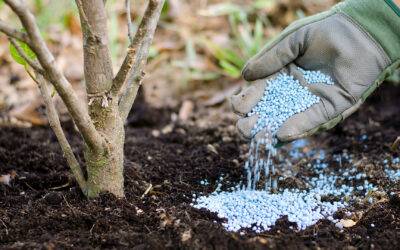
If the tree took a hit, recovery care can help. Soil decompaction, tree fertilization, and pruning are common steps after a project.
Frequently Asked Questions
Does tree wrap help during construction?
Wrapping the trunk does not protect the roots, and the roots are where most construction damage happens. A fenced protected area and a marked equipment route do much more.
Do trees away from the work area need protection?
Yes. The root zone reaches past the branches, and equipment, trenches, and storage areas reach well beyond the building itself. A tree that looks far from the work can still lose roots to a trench or a packed driveway path.
What are the main ways to protect trees during construction?
Make a plan, fence the protected area, mulch the root zone, mark a route for equipment, and tell your builder before work starts.
Protect Your Trees Before the Work Starts
The best time to protect a tree is before the equipment arrives. If you have a project coming up, request a free estimate or call us at 573-893-2896. We will look at the trees on your site and walk you through what protection involves.
Jefferson City is home base, but we serve throughout mid-Missouri, including Tipton, Stover, Versailles, Lake of the Ozarks, Eugene, St. Elizabeth, Westphalia, Linn, Fulton, Kingdom City, Columbia, Boonville, and the communities in between.
DO YOU NEED HELP?
We’re here to serve you and we provide free estimates.