
A few yellow leaves usually aren’t enough to panic over. Trees lose leaves, deal with heat, and have rough weeks just like the rest of us.
When a tree starts turning yellow during spring or summer, though, especially across a large part of the canopy, that’s worth paying attention to. Several different problems can cause it, and a lot of them look almost the same from the ground.
Here’s why leaves on a tree turn yellow, what the pattern may be telling you, and when it makes sense to have the tree checked.
Why Do Leaves on a Tree Turn Yellow?
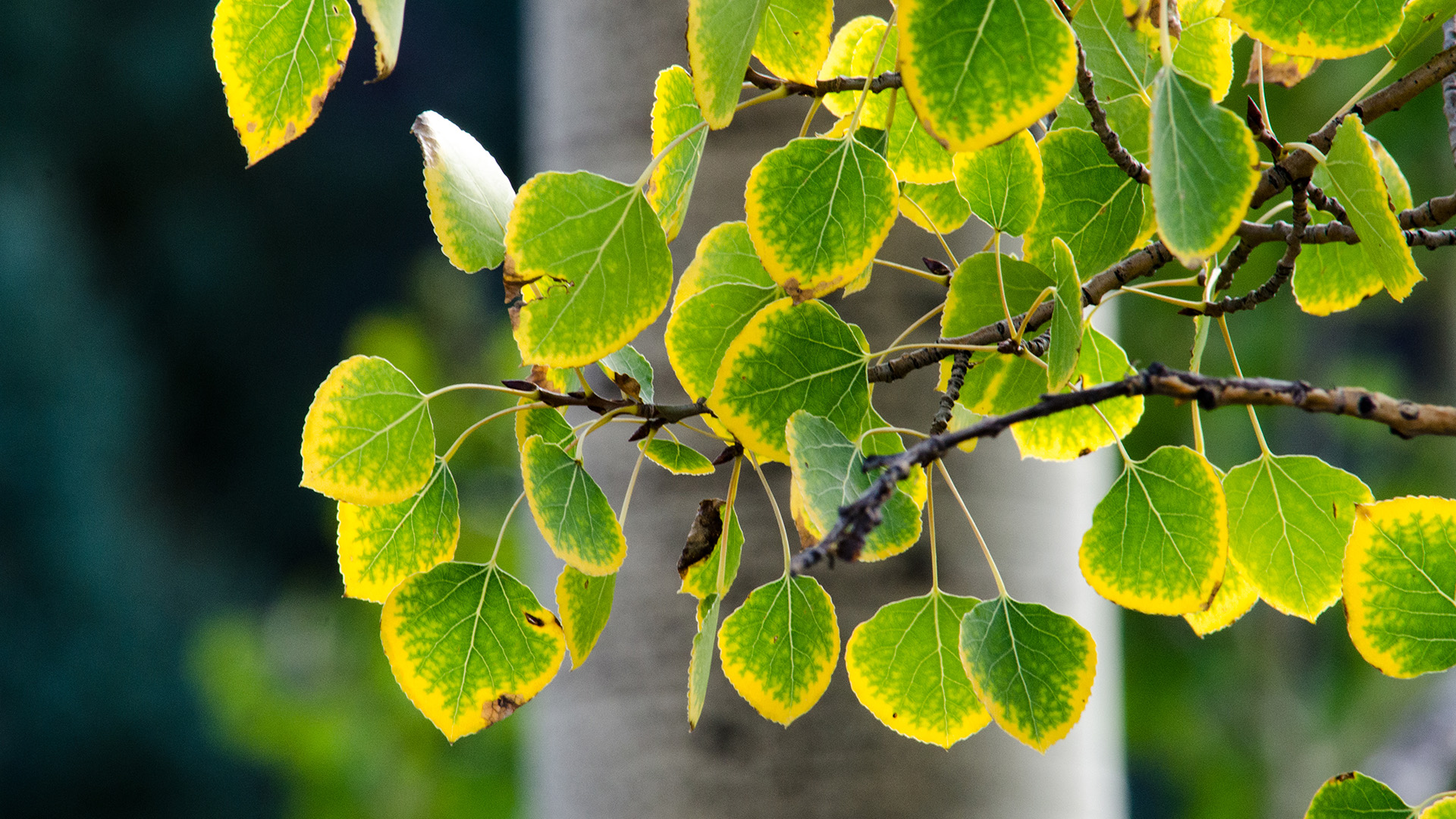
Leaves usually look green because they contain chlorophyll, which helps the tree use sunlight for energy. When chlorophyll breaks down, or the tree struggles to produce enough of it, the leaves start turning yellow.
That can happen for a handful of reasons: normal fall color, heat or drought stress, too much water, root damage, compacted soil, nutrient problems, disease, or insect activity.
The color alone doesn’t give you the full answer. Timing, location, and other symptoms matter just as much.
For example, yellow leaves in October may be completely normal. Yellow leaves falling in July are a different conversation.
7 Common Reasons Tree Leaves Turn Yellow
Normal Seasonal Change
If the leaves are turning yellow as fall begins, this is typically a normal change.
As daylight shortens and temperatures cool, many deciduous trees stop producing as much chlorophyll. The green color fades, allowing yellow and other fall colors to show through.
Different tree species change color at different times too, so if one tree in your yard turns yellow before the others nearby, it may simply reflect a difference in species or seasonal timing.
Yellowing is more concerning when it happens during spring or summer, when the canopy should still be green and active.
Drought and Heat Stress
Mid-Missouri summers can be hard on trees, especially during long stretches of heat with little rainfall.
A tree under drought stress can show yellow leaves, brown or curled leaf edges, early leaf drop, smaller leaves, or a thinning canopy.
Recently planted trees may struggle sooner because their roots haven’t spread far enough into the surrounding soil. Mature trees can also show delayed stress, sometimes weeks after the driest weather has passed.
That’s part of what makes tree problems tricky. Trees don’t always complain right away.
Too Much Water or Poor Drainage
Yellow leaves can also come from too much water.
When soil stays saturated, roots may not get enough oxygen. That limits their ability to move water and nutrients into the tree, even though the ground is already wet.
The symptoms can look surprisingly similar to drought: yellow leaves, wilting, early leaf drop, weak growth, and branch decline.
This is why adding more water every time you see yellow leaves isn’t always helpful. The tree might be thirsty, or the roots might already be sitting in soil that’s too wet to use properly.
Root Damage or Compacted Soil
Roots do most of their work underground, so homeowners often don’t notice a problem until the canopy starts changing.
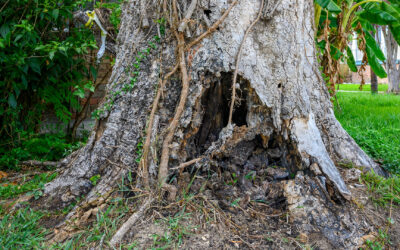
Root damage can come from construction, trenching, grading, heavy equipment, repeated foot traffic, soil piled around the trunk, or lawn damage near the root zone.
Compacted soil makes it harder for roots to access oxygen and moisture. Damaged roots can also struggle to move nutrients into the leaves.
Yellowing may appear across the whole canopy or mainly on the side where the root damage occurred.
Nutrient Problems
Yellow leaves can sometimes point to a nutrient issue, though fertilizer isn’t always the fix. The tree may have plenty of nutrients in the soil but be unable to access them because of root damage, soil compaction, poor drainage, incorrect soil pH, or chronic stress.
Nitrogen, iron, or magnesium may be involved in some cases, but guessing can create more problems than it solves.
Epsom salt is often suggested online for yellow leaves because it contains magnesium, but it won’t fix drought, excess water, damaged roots, disease, poor drainage, or most pest problems. Unless a magnesium deficiency has actually been identified, Epsom salt won’t help at all.
If nutrient problems are suspected, a professional evaluation is more useful than trying random products that may do more harm than good.
Tree Disease
Some tree diseases can cause yellow leaves, especially when the yellowing shows up alongside dark or black leaf spots, curling leaves, early leaf drop, dead branch tips, bark damage, or fungal growth.
Yellow leaves with dark spots usually point toward a leaf disease rather than a simple watering problem. Many diseases look similar early on, so the right treatment depends on what’s actually causing the problem.
Hentges Tree Service offers tree disease treatment focused on identifying the issue before determining what type of care may be appropriate.
Insect or Mite Damage
Pests can also interfere with a tree’s ability to keep its leaves healthy.
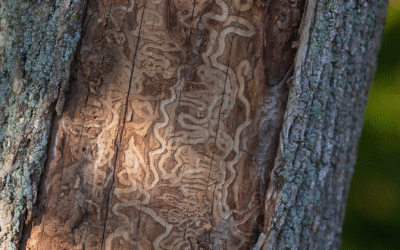
Depending on the pest, you may also notice holes in leaves or bark, sticky residue, webbing, distorted leaves, unusual insect activity, branch dieback, or woodpecker damage.
Some insects feed directly on leaves. Others damage the bark or interfere with the tree’s internal movement of water and nutrients.
Yellow leaves don’t prove there’s a pest problem, but they are one clue when other signs are present.
What the Yellowing Pattern Can Tell You
The pattern of yellowing often gives you better clues than the color alone.
- Yellow leaves across the whole tree: water stress, soil problems, root issues, nutrient trouble, or seasonal change.
- Yellowing mainly on one side: local root damage, drainage issues, construction damage, or uneven sun exposure.
- Yellow leaves with brown edges: heat, drought, root stress, leaf scorch, or excess salts.
- Yellow leaves with dark spots: a possible fungal or bacterial leaf disease.
- Yellow leaves falling in summer: water stress, root problems, disease, or pest activity.
- Yellow leaves only in fall: normal seasonal color in many deciduous trees.
These are clues, not a complete diagnosis. A single yellow branch may point to a local injury, while an entire yellow canopy may suggest a broader root, soil, or water problem.
Can Yellow Tree Leaves Turn Green Again?
Sometimes, but often a fully yellow leaf won’t return to its original green color.
The better sign to watch is whether the tree produces healthy new leaves and growth after the problem is corrected.
A tree may recover if the yellowing is caused by temporary heat stress, mild drought, short-term drainage problems, early nutrient stress, or minor root disturbance. Recovery is less certain when yellowing comes with major root damage, advanced disease, heavy pest activity, dead branches, or a thinning canopy.
Even when the tree improves, the existing yellow leaves may still fall. What matters most is what happens next.
When Yellow Leaves Signal a Bigger Problem
Yellow leaves become more concerning when they appear with other warning signs.
Watch for:
- Heavy leaf drop during summer
- Large dead branches
- A thinning canopy
- Peeling or damaged bark
- Trunk cracks
- Mushrooms near the base
- Exposed or damaged roots
- Worsening symptoms each year
If the tree is also losing limbs, leaning, or showing major decay, you’re likely looking at signs a tree is dying rather than a simple yellowing problem.
Not Sure Why Your Tree’s Leaves Are Turning Yellow?
A professional tree evaluation can help determine whether the cause is seasonal change, drought stress, excess moisture, root damage, pests, or disease, and whether the tree needs treatment or simply closer monitoring.
Hentges Tree Service helps homeowners throughout Jefferson City, Columbia, the Lake of the Ozarks, and surrounding Mid-Missouri communities understand what’s affecting their trees and decide the right next step.
Contact us at 573-893-2896 to schedule a service.
Frequently Asked Questions
Why are my tree’s leaves turning yellow and falling off in summer?
Summer yellowing and leaf drop can be caused by heat, drought, too much water, damaged roots, disease, or pests. Because summer leaf drop isn’t usually part of normal fall change, widespread symptoms deserve closer attention.
Can yellow tree leaves turn green again?
Rarely. A leaf that’s already fully yellow usually stays that way or falls. Healthy new growth afterward is the better sign to watch for.
Does Epsom salt help yellowing tree leaves?
Only if the cause is an actual magnesium deficiency, which is rare. It won’t address drought, excess moisture, root damage, disease, or pest problems.
Should you cut off yellow leaves from a tree?
Removing them doesn’t fix the cause. Figuring out whether it’s water, root, soil, pest, disease, or seasonal stress is the bigger question.
Do yellow leaves mean a tree is dying?
Not necessarily. Yellow leaves may result from normal fall color or temporary stress. They become more concerning when combined with early leaf drop, dead branches, bark damage, root problems, or a thinning canopy.
DO YOU NEED HELP?
We’re here to serve you and we provide free estimates.